


Review: Living, Leading, and the American Dream
Collection of essays by nonprofit leader John Gardner.
Collection of essays by nonprofit leader John Gardner.

One of the biggest challenges in nonprofit management is hiring and retaining talented executive leaders. In this conversation with Stanford Social Innovation Review managing editor Eric Nee, Thomas Tierney shares findings from the Bridgespan Group's study on the "leadership deficit." Tierney talks about how this crisis is affecting nonprofits, and what organizations can do to address the problem.

The leaders of international humanitarian organizations, such as CARE and Oxfam talk candidly about management strategy, organizational goals, advocacy, accountability, and partnerships.
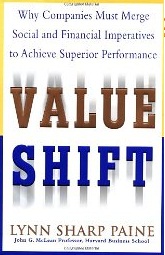
The author has penned an engaging book that unravels the complicated issues surrounding business ethics.

Since 1970, more than 200,000 nonprofits have opened in the U.S., but only 144 have reached $50 million in annual revenue. They got big by doing two things: They raised the bulk of their money from a single type of funder. And just as importantly, these nonprofits created professional organizations that were tailored to the needs of their primary funding sources.

Combining idealism with a genuine love of business, John Sage cofounded the social enterprise company Pura Vida, one of the largest distributors of fair trade organic coffee in the world. In this University podcast, he discusses his mission to improve the lives of people in coffee-growing regions. Sage explains how Pura Vida works at the intersection of the for-profit and nonprofit sectors, showing how the two can be blended to generate both revenues and social good.

Grantees of foundations have little control over which program officer takes their case. Yet program officers make or break grantees’ experiences with foundations. To trigger social change, foundations must give program officers better training, clearer expectations, and regular performance feedback.

Most nonprofits don’t know how to lobby and, worse, think that it entails cutting shady deals with sleazy characters. Yet lobbying is nothing more than educating legislators – a right that our democracy guarantees. To make change, nonprofits must learn to lobby. And who knows? They may even learn to love it.

Starbucks has taken environmental sustainability and corporate social responsibility seriously in its work with coffee farmers. In this audio lecture, Dennis Macray discusses how the United States' leading coffee retailer is reshaping its business practices and reinventing the international coffee trade.

Nonprofit management now requires the innovative use of information technology. In this Stanford podcast, nonprofit technology consultant Paul Lamb explores how the web is transforming nonprofits and NGOs. He looks ahead to the potential that ubiquitous mobile computing, virtual worlds, user-generated content, and social networking have to upend traditional constraints and to open new doors.